The honest answer to "how long will it take?" for a custom home in South Florida is 14 to 22 months from contract signing to certificate of occupancy, with the majority of our projects landing between 16 and 20 months. That range is wider than it needs to be because it covers a lot of variables: scope complexity, lot conditions, permitting timeline, and whether the client keeps the scope stable once construction starts. Here is how that timeline breaks down in practice.
Pre construction: 2 to 4 months
Before construction starts, the project has to move through design development, engineering, permitting, and preparation. Design development takes 6 to 10 weeks for a typical custom home and includes architectural drawings, structural design, mechanical and plumbing engineering, civil engineering if needed, and finish selections. Permitting then takes 6 to 12 weeks at the municipal level (more if variance or ARCOM review is involved). Final pre-construction steps (subcontractor mobilization, material orders for long-lead items, site preparation) run another 2 to 4 weeks in parallel with the end of permitting.
Clients who have not selected their finishes by the time construction starts create delays downstream. Cabinetry has a 12 to 16 week lead time once ordered. Custom windows and doors have 10 to 14 week lead times. Every one of those items needs to be ordered during pre-construction or early framing so they arrive when they are needed. A client still deciding on kitchen cabinets in month 5 of construction is setting up their own delay.
Site work and foundation: 4 to 8 weeks
Site work begins with demolition of any existing structure, site clearing, rough grading, and utility coordination. Foundation work follows: formwork, reinforcing steel, inspection, and concrete pour. On a simple slab-on-grade foundation in sandy Delray Beach soil, this phase runs 4 to 5 weeks. On a complex coastal foundation with pilings and a grade beam, it can extend to 8 to 10 weeks.
Framing and dry-in: 8 to 12 weeks
Framing includes floor framing (if applicable), wall framing, roof framing, roof sheathing, and window and door installation. Dry-in refers to getting the building envelope water-tight: roof system installed, windows and doors in place, and wall sheathing wrapped in weather-resistant barrier. A clean framing sequence on a moderately complex custom home runs 8 to 10 weeks. Complex roof configurations, elevated pile foundations, or unusual architectural geometry add time.
Mechanical rough-in: 4 to 6 weeks
With the building dry-in, mechanical systems get installed: plumbing rough, electrical rough, HVAC rough, low-voltage (network, audio, security) rough, and gas lines if applicable. This phase happens substantially in parallel across trades, which is why its duration is shorter than it sounds. Rough-in inspection by the municipality is required before proceeding to drywall.
Insulation, drywall, and interior framing: 4 to 8 weeks
After rough-in inspection passes, insulation goes in, drywall gets hung and finished, and any interior partition framing that was deferred gets completed. Drywall finishing (taping, mudding, sanding) takes about 3 weeks on a typical home. Painting starts immediately after drywall and continues through multiple coats.
Interior finish work: 12 to 18 weeks
This is the longest continuous phase on a custom home and includes cabinetry installation, tile and stone, flooring, trim carpentry, custom millwork, appliance installation, plumbing fixture installation, electrical trim (fixtures, switches, outlets), and paint finish. The sequence matters: tile has to be set before cabinetry in some configurations, countertops are templated after cabinets are installed, and appliance installation happens after countertops. A well-sequenced finish phase runs 12 to 14 weeks. A poorly sequenced one extends to 18 weeks or more.
Exterior finish, pool, and landscape: concurrent with interior finish
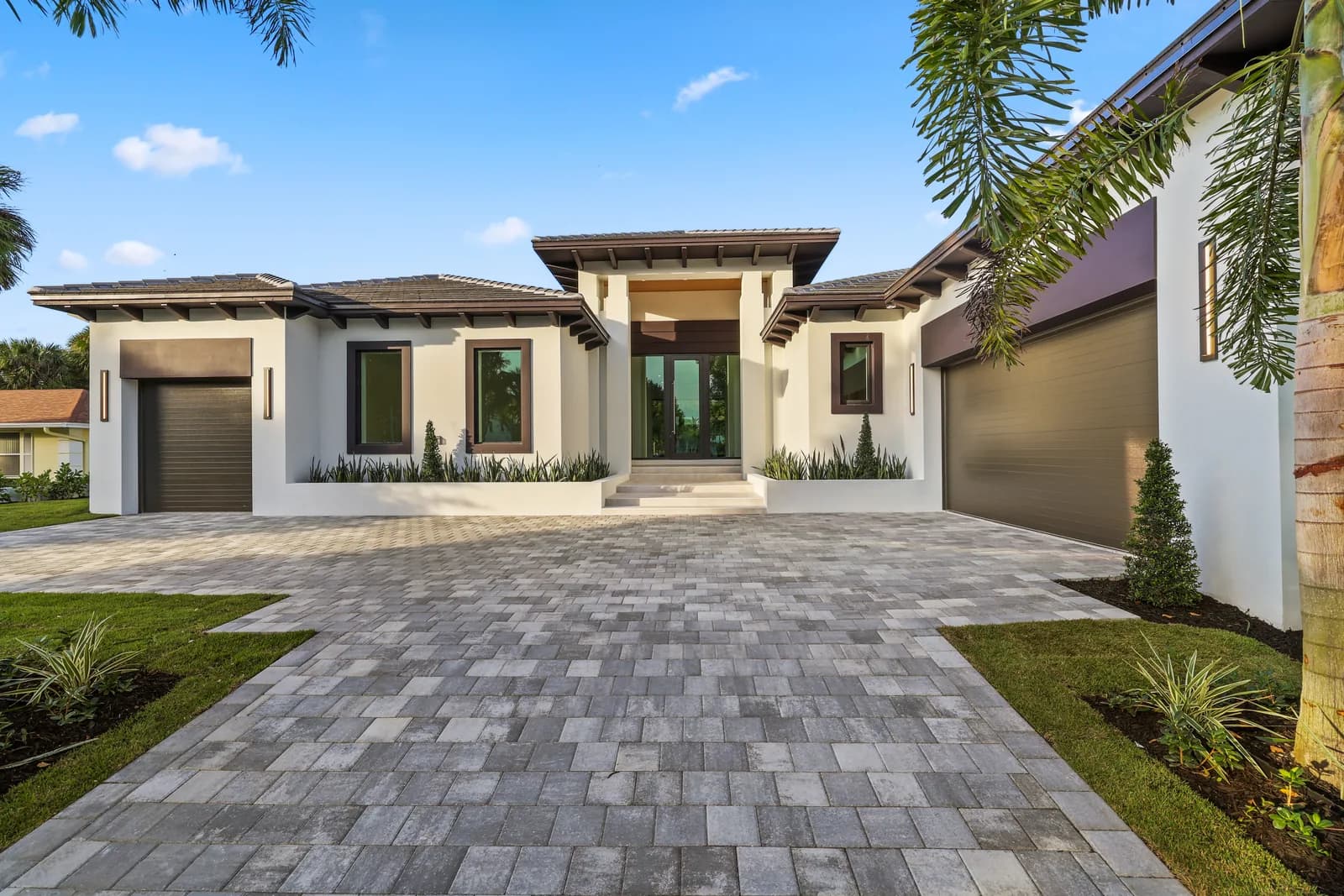
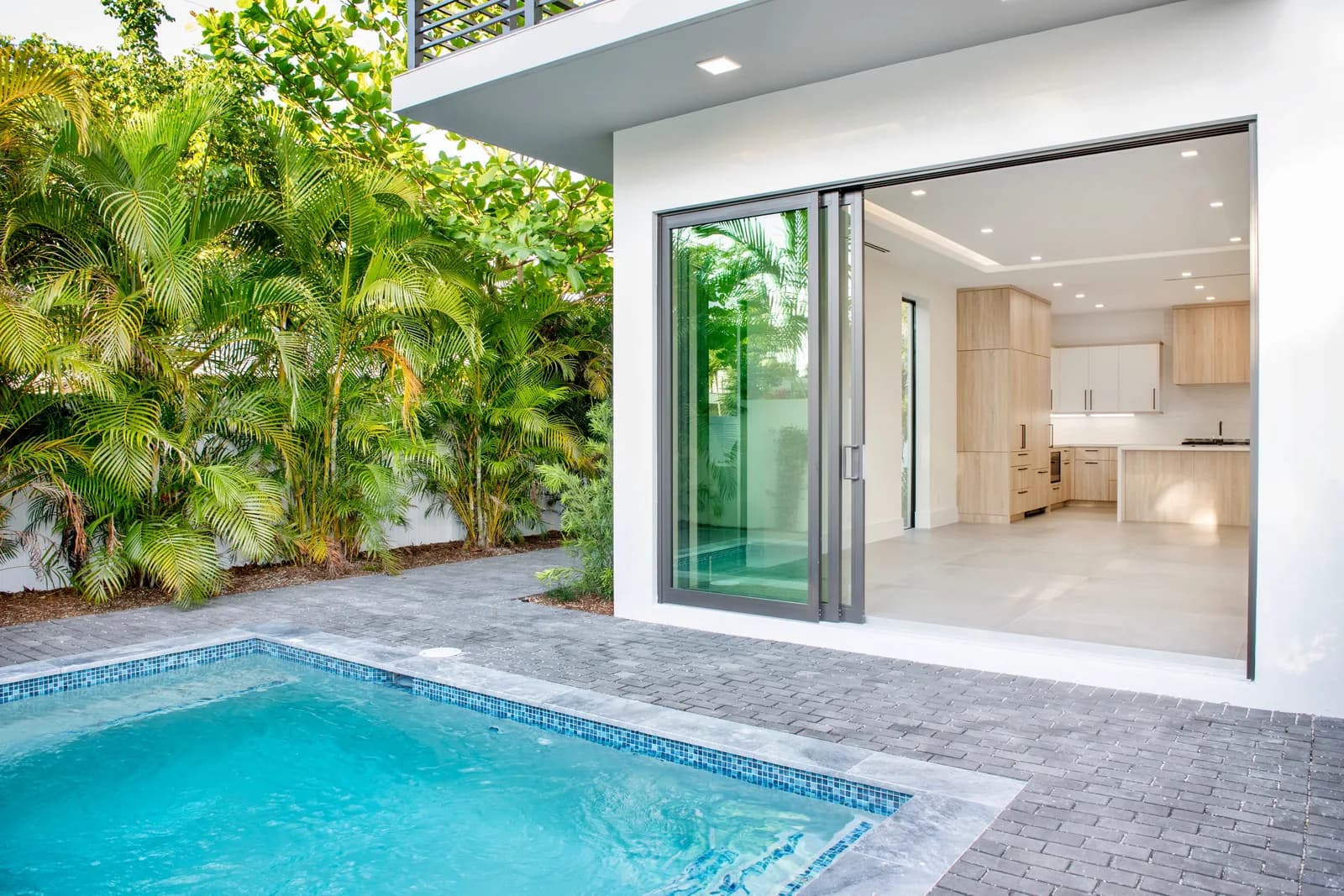
While the interior finish phase runs, exterior work continues in parallel: stucco finish coat, exterior painting, pool and spa construction, pool deck and hardscape, driveway pavers, and landscape installation. On a well-coordinated job, the exterior and interior land at substantially complete at the same time, enabling the final push toward certificate of occupancy.
Punch list and CO: 2 to 4 weeks
The final phase is walkthrough, punch list, final inspections, and certificate of occupancy. Punch list items are minor corrections and completions identified during the walkthrough. Final inspections by the municipality verify that every code item is complete and compliant. The certificate of occupancy is issued after all inspections pass. Most custom homes finish punch and receive CO within 3 to 4 weeks of substantial completion.
What makes a custom home take longer?
Need a real schedule?
Tell us your lot and your scope. We will give you a timeline with the assumptions written down, not a number pulled from the air.
Get a Real TimelineThe variables that most often extend timelines beyond the 14 to 22 month baseline are: extensive client-initiated scope changes after construction begins, long-lead material delays or manufacturer issues, weather (mostly during the dry-in phase), and subcontractor scheduling friction on projects where the builder does not have established relationships. At SouthShore, the timeline discipline comes from locked-in scope at contract, aggressive material ordering during pre-construction, and subcontractor relationships that produce reliable scheduling. You can read more about our process on our design-build services page.
Frequently Asked Questions
Can I build faster if I pay more?
Marginally. Acceleration premiums for trades, overtime on the job, and expedited material orders can shave 4 to 8 weeks off a typical timeline if the budget supports it. But the structural limits on timeline (permit review, inspection schedules, long-lead materials) are not money-solvable. A 14-month custom home is possible; an 8-month one is not.
What is the longest-lead item on a typical custom home?
Custom cabinetry and custom windows and doors are usually the longest-lead items, at 12 to 16 weeks from order to delivery. Specialty stone (imported slabs) can be longer. Ordering these items early in the project, before framing begins in some cases, is how we keep them from becoming schedule constraints.
What happens if construction runs over schedule?
Every custom home contract should include a substantial completion date and provisions for schedule-related issues. At SouthShore, our contracts specify the target completion date, reasons for acceptable delay (weather events, force majeure, client-initiated scope changes), and the communication cadence for any schedule variance. Schedule issues are surfaced and documented in writing the moment they become likely, not at the end of the project.

President, SouthShore Builders
Chase Lamson leads SouthShore Builders with decades of South Florida custom home experience. SouthShore is a licensed general contractor serving Palm Beach County and Broward County.