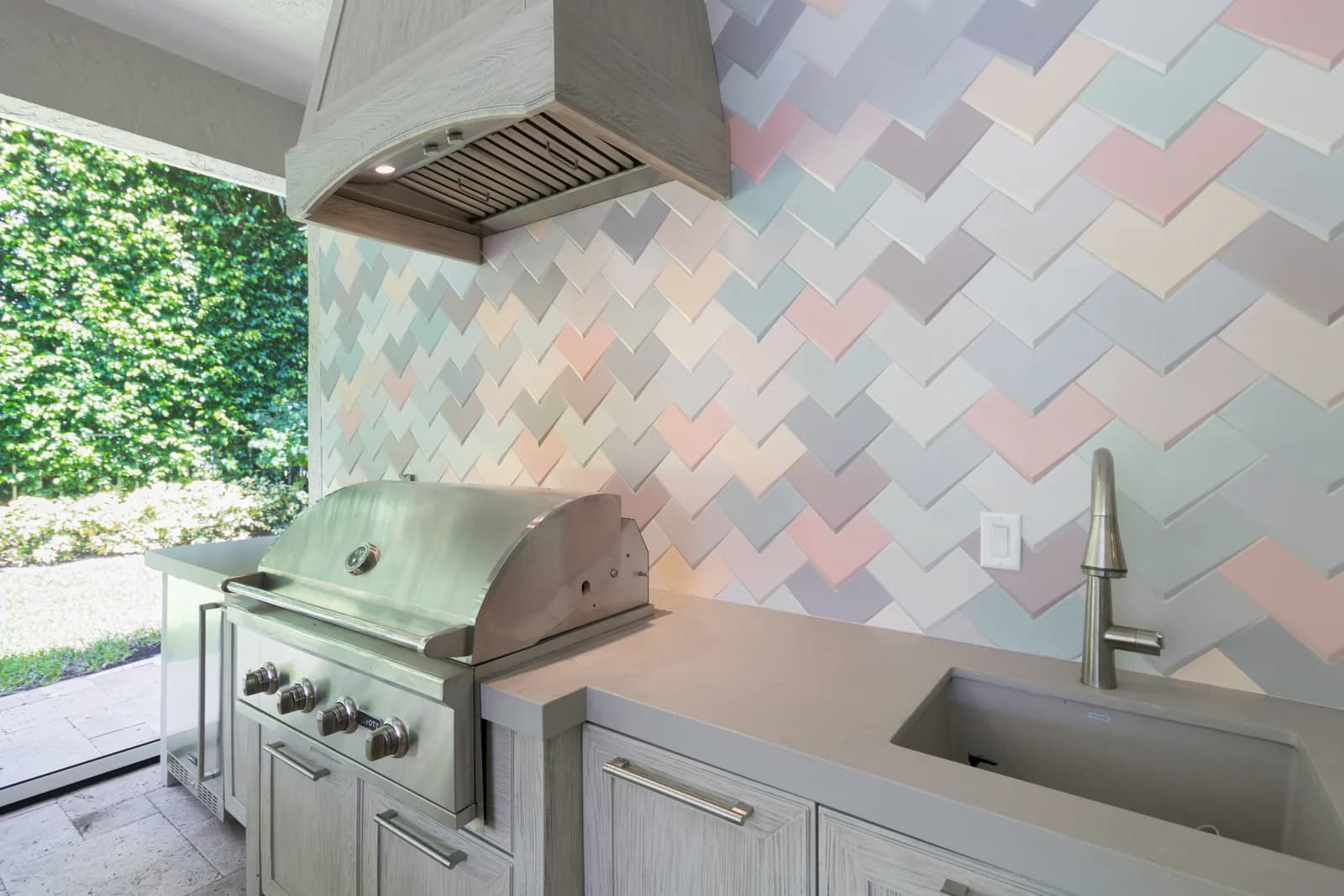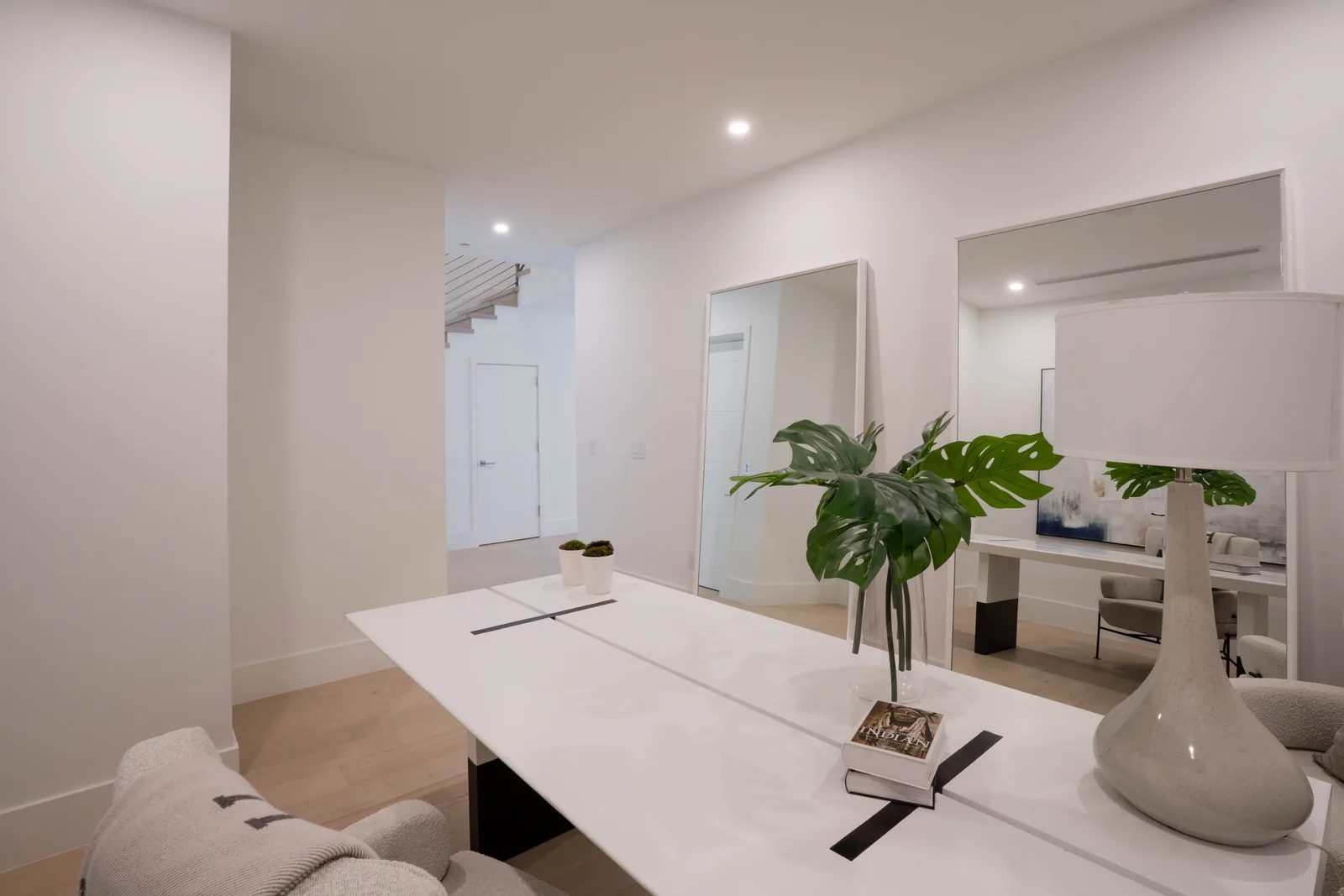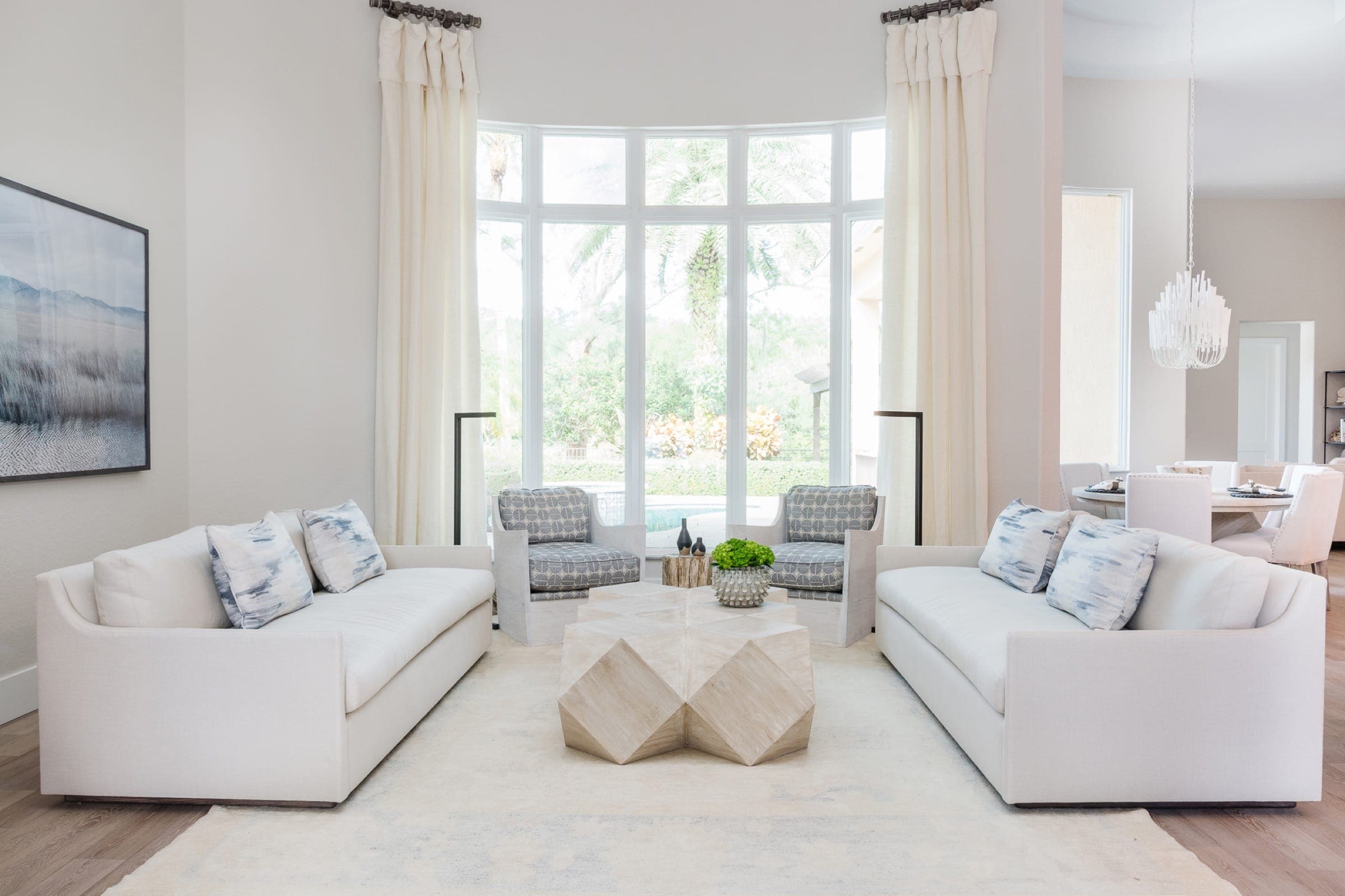
Transitional design sits between strictly traditional and strictly modern: it keeps pitched hip or low pitch gable rooflines, defined eaves, and simplified trim, but pairs them with a cleaner material palette, simpler proportions, and more open interiors. It reads as current without reading as aggressively contemporary, ages well, and in our service area draws a wider buyer pool at resale than modern coastal homes of similar quality. It is the most commonly requested style on our custom home inquiries in Delray Beach and Boca Raton.
Transitional is the most commonly requested architectural style we see on custom home inquiries in Delray Beach, Boca Raton, and the surrounding market. It is also the most commonly misdefined. Clients often mean something different when they say transitional than the architect and builder do, and that mismatch in definition can lead to a design direction that surprises the client when they see it realized. Here is what transitional actually is and where it fits.
What transitional design means
Transitional architecture occupies the space between strictly traditional (classical, colonial, Mediterranean, or Victorian) and strictly modern or contemporary. It carries more architectural articulation than modern coastal (pitched rooflines, defined eaves, some decorative trim) but uses a cleaner material palette, simpler proportions, and more open interior layouts than a strictly traditional design would.
The recurring elements across transitional homes in our market include:
- Pitched rooflines, typically hip or low-pitch gable, rather than the flat or low-slope rooflines of modern coastal
- Composition tile or standing-seam metal roofing, less commonly clay tile (which skews more Mediterranean)
- Smooth stucco exteriors, sometimes with board-and-batten or lap siding accents
- Defined exterior trim and casings around windows and doors, but simplified from classical profiles
- A warmer palette than modern coastal, often including off-white, cream, or soft warm gray
- Natural stone accents, frequently coral stone or travertine, on select exterior elements
- Open interior floor plans but with defined zones (dining room, study) rather than a single great room
- Interior details that can include shiplap, wainscoting, beamed ceilings, or coffered ceilings, simplified from their traditional expressions
Why transitional works in South Florida
Transitional serves a specific buyer profile well: clients who want a home that reads as current and livable without reading as aggressively contemporary. For buyers moving to South Florida from the Northeast or Midwest, transitional often feels more familiar than modern coastal, while still offering the open floor plans, large windows, and indoor-outdoor connection that the climate rewards. The style also ages gracefully: well-executed transitional homes from 2010 still look current, whereas some of the more aggressively contemporary designs from that era now read as dated.
From a market perspective, transitional homes in our service area consistently draw a wider buyer pool at resale than modern coastal homes of similar quality. This is not because one style is better, but because transitional appeals to a broader range of taste. For clients who may not occupy the home indefinitely, that broader appeal reduces resale timeline risk.
Where we have built transitional
SouthShore's portfolio includes multiple transitional custom homes across our service area. 20 E Ocean Avenue in Ocean Ridge is a transitional modern home completed in 2023, designed to complement our modern coastal project on the adjacent lot while maintaining distinct character. La Costa Dr on Palm Beach island was a transitional custom home designed to meet the ARCOM review standards that favor this style over more aggressively contemporary alternatives. 908 NE 9th Avenue and several other East Delray projects have used a transitional design vocabulary to fit neighborhood context while delivering contemporary livability.
How transitional differs from contemporary
Contemporary is sometimes confused with transitional, but they are different. Contemporary refers broadly to what is being designed now and tends to track current architectural conversations, which can include minimalism, brutalism, or more expressive forms. Transitional is a defined style with stable conventions (pitched rooflines, articulated trim, warmer palette). A contemporary home can be transitional, modern coastal, or neither. A transitional home is always transitional.
When transitional is not the right answer
Landing between styles?
Tell us what you are drawn to. We build across styles and we will tell you what works on your lot.
Talk Through Your DesignTransitional works less well on projects where the lot or the buyer program calls for a more specific architectural statement. On a prime oceanfront lot where the view is the primary feature, modern coastal's expansive glass and minimal massing typically produces a more compelling result. On a Palm Beach island lot where ARCOM expects a specific formal language (Mediterranean, British Colonial, Bermudian), a transitional approach may face more review friction than committing to the expected style. On an architecturally ambitious project where the client wants a signature home, transitional's stylistic safety can feel like a missed opportunity.
If you are planning a project and considering style direction, the useful question is not "which is trendiest?" but "which style best serves this lot, this client, and this neighborhood?" You can see examples of both transitional and modern coastal work on our projects page.
Frequently Asked Questions
Does transitional cost less than modern coastal?
They land within 5 to 10 percent of each other on comparable footprint and finish level. Transitional spends more on roof framing and exterior trim; modern coastal spends more on large-format glass and custom metalwork. Overall, the styles are cost-comparable.
Can a home be both modern coastal and transitional?
Yes, though the resulting design is typically one style with elements borrowed from the other, not a true hybrid. Some of our recent work blends modern coastal massing with transitional interior details like beamed ceilings or wood accents, which we describe as modern transitional. The label matters less than the design decisions.
Is transitional the safest choice for resale?
In the East Delray, Boca Raton, and coastal Palm Beach County markets, transitional homes consistently draw a wider buyer pool than aggressively contemporary or modern coastal homes. Well-executed transitional typically sells faster at resale, though top-tier modern coastal homes on prime lots regularly exceed transitional on price per square foot. Safety and ceiling are different questions.

President, SouthShore Builders
Chase Lamson leads SouthShore Builders with decades of South Florida custom home experience. SouthShore is a licensed general contractor serving Palm Beach County and Broward County.