Short answer
A ground up custom home build in Palm Beach County is typically financed with a construction loan that funds in draws tied to build milestones, then converted to a permanent end loan at certificate of occupancy. Lenders require a licensed GC, a fixed price contract, a detailed budget, and an as completed appraisal before they will commit.
Financing a ground up custom home in Delray Beach is not the same as financing a resale. There is no finished house for a lender to appraise and secure against. Instead, you are asking an institution to fund a project in stages, against a set of plans, a licensed contractor, and a projected completed value. Most buyers in Palm Beach County come to us having already talked to a retail mortgage officer who handles purchase loans all day and has never closed a construction loan. That is the wrong starting point. Before you tour lots on Palm Trail or Lake Ida or pull permits with the Palm Beach County building department, you need to understand the three loan structures that actually apply to ground up construction and what each one demands from you.
What Is a Construction Loan and How Do Draws Work
A construction loan is a short term credit facility, typically 12 to 18 months, that funds the build in stages called draws. The lender does not hand you the full loan amount on day one. Instead, draws are released at defined milestones, foundation complete, framing complete, rough mechanical complete, drywall, and final completion. At each milestone, the lender sends an inspector to verify the work before releasing the next draw. During construction you pay interest only on the amount drawn, not on the full loan commitment. That matters because a $2 million build does not reach full draw status until well into the schedule.
In Palm Beach County, most construction lenders require a licensed general contractor on the loan. That means your GC signs the construction contract, holds the permit with the Palm Beach County building department, and is named in the draw request process. We manage this workflow for every project we build, from lots near the NE 7th Avenue corridor to estates off Federal Highway. When we submit a draw request, we include lien waivers from every sub and supplier paid from the previous draw. That paperwork protects the lender and it protects you. If you want to see how we structure the build schedule that underpins that draw timeline, visit our custom home building services page.
Owner Builder Loans: What They Are and Why Most Buyers Should Avoid Them
An owner builder loan allows you, the homeowner, to act as your own general contractor and pull the permits yourself. On paper this sounds like a way to save the GC margin. In practice, most institutional lenders in Palm Beach County will not touch an owner builder loan for a ground up custom build unless the borrower can document significant construction management experience. The few portfolio lenders that do offer this product charge higher rates and require larger reserves because the risk of cost overruns, failed inspections, and schedule delays is statistically higher without a licensed GC managing the trades.
There is also a practical problem. The Palm Beach County building department requires the permit holder to be either a licensed contractor or a homeowner who occupies the finished home and can demonstrate competency. If you plan to use the home as a primary residence and you have real construction experience, this path exists. For the buyers we work with in Seagate, Lake Ida, and east Delray Beach, the math rarely works out in favor of going owner builder when you account for the higher borrowing cost, the time required to manage subs, and the exposure to liability during construction.
Ready to get your build budget reviewed?
Send us your lot address and any preliminary plans you have. We will review the scope and put together a realistic budget and draw schedule you can take to a lender.
Get Your Budget ReviewedEnd Loans: How the Permanent Mortgage Fits Into the Process
An end loan, sometimes called a take out loan, is the permanent mortgage that replaces the construction loan once the certificate of occupancy is issued. Some lenders offer a construction to permanent product that converts in a single closing, which saves you one set of closing costs. Others require two separate closings, one for the construction loan and one for the end loan. The two close structure is more common with portfolio lenders and community banks, which are often more flexible on lot loan terms and draw structures but less competitive on the permanent rate.
What lenders want to see before they will commit to either structure is consistent across Palm Beach County. They want a fixed price construction contract with your GC, a detailed line item budget, a construction schedule, plans that have cleared preliminary review, and a qualified appraisal of the completed home based on those plans. The appraisal is called an as completed or subject to appraisal, and it drives your loan to value calculation. If the as completed value does not support the total project cost, you will be asked to bring more equity to the table. We work with buyers at the planning stage to make sure the program and the budget are aligned before anyone sits down with a lender.
What Lenders Want to See Before They Fund a Ground Up Build
Beyond the construction contract and budget, lenders underwriting a ground up build in Palm Beach County will scrutinize four things. First, your liquidity. Lenders want to see reserves beyond the down payment and closing costs, because construction projects encounter surprises. Second, the contractor's license and insurance. Your GC must carry general liability and workers compensation, and the lender will verify the license is active with the state. Third, the lot. If you are financing the land as part of the construction loan, the lender will want a clean title search and may require the lot to already be owned free and clear or financed separately. Fourth, the plans. Full construction documents, not just a concept, are required before most lenders will issue a commitment letter.
We help buyers on our Delray Beach projects navigate this process by providing the documentation lenders ask for repeatedly: the draw schedule, the project timeline, our license and insurance certificates, and the construction contract in a format their underwriters recognize. The goal is to make the lender's job straightforward so the loan closes before the lot sits idle.
At SouthShore Builders, we have worked through every variation of this financing process on projects across east Delray Beach, Boca Raton, and Palm Beach County. We know what a lender's inspector looks for at each draw milestone, and we know how to keep a draw schedule tight so your interest carry stays manageable. If you are ready to move from concept to a funded build, reach out to our team through our contact page and let us walk through the numbers with you.
Key takeaways
- Construction loans fund a ground up build in stages called draws, and lenders will only release each draw after a site inspection confirms the work is complete.
- Owner builder loans exist but are difficult to obtain in Palm Beach County for most buyers and rarely save money once higher rates and management time are factored in.
- An end loan or construction to permanent product replaces the construction loan at certificate of occupancy, and locking in that commitment before you break ground is essential.
- Lenders underwriting a Palm Beach County build want a licensed GC, a fixed price contract, a detailed line item budget, full construction documents, and an as completed appraisal.
- The lot you own free and clear can often count as equity toward the construction loan, which affects how much additional cash you need to bring to closing.
How do the options compare?
- Construction Loan: Short term, 12 to 18 months. Funds in draws at build milestones. Interest only during construction. Requires licensed GC and fixed price contract. Replaced by end loan at certificate of occupancy.
- Owner Builder Loan: Borrower acts as GC and pulls permits. Available from select portfolio lenders only. Higher rates and reserve requirements. Difficult to qualify for without documented construction experience.
- Construction to Permanent Loan: Single closing product that converts to a permanent mortgage automatically at certificate of occupancy. Saves one set of closing costs. Rate and terms on the permanent phase are locked at initial closing.
- End Loan (Standalone): Permanent mortgage taken out after construction is complete. Requires a second closing. Can allow you to shop rates closer to completion. Common when the construction lender is a portfolio bank with less competitive long term rates.
"The lender is not funding a dream, they are funding a contract, a schedule, and a licensed team, so get all three locked down before you sit across the table from an underwriter."
Sources
- Consumer Financial Protection Bureau: What is a construction loan?
- Fannie Mae Single Family Selling Guide: Construction to Permanent Financing
Frequently Asked Questions
Can I use a conventional mortgage to build a custom home in Delray Beach?
No. A conventional purchase mortgage requires a finished home to secure against. Ground up construction requires a construction loan, which funds in draws as work is completed. Once the home is finished and the certificate of occupancy is issued, you can refinance into a conventional permanent mortgage or convert through a construction to permanent product.
How much do I need to put down for a construction loan in Palm Beach County?
Most construction lenders in Palm Beach County require 20 to 25 percent equity based on the as completed appraised value. Some portfolio lenders will go lower for borrowers with strong liquidity and a fully licensed GC on the contract. The lot you own free and clear can often count toward that equity requirement.
How long does a typical draw cycle take once we submit a request?
Most lenders take 5 to 10 business days from draw request submission to funds released, depending on how quickly their inspector can schedule a site visit and how complete the documentation is. We submit draw requests with full lien waiver packages to minimize back and forth and keep that cycle as short as possible.
What happens if the project costs more than the original budget?
Cost overruns above the original loan commitment require the borrower to cover the difference out of pocket or negotiate a loan modification with the lender. This is why lenders want to see reserves and why we work hard to build a realistic fixed price contract before the loan closes. A contingency line in the budget, typically 5 to 10 percent, is standard practice.
Do I need to own the lot before I apply for a construction loan?
Not always. Some lenders will finance the lot and construction together in a single loan, with the lot purchase closing at the same time as the construction loan. Others require the lot to already be owned. We recommend clarifying this with your lender early because it affects the transaction structure and your equity calculation.
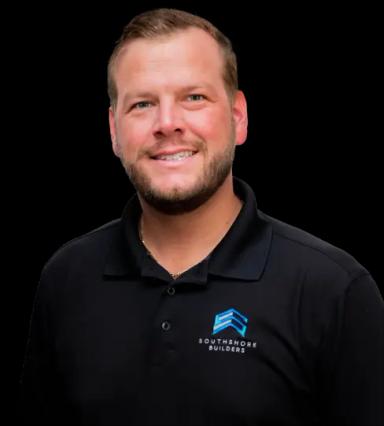
President, SouthShore Builders
Chase Lamson leads SouthShore Builders with decades of South Florida custom home experience. SouthShore is a licensed general contractor serving Palm Beach County and Broward County.